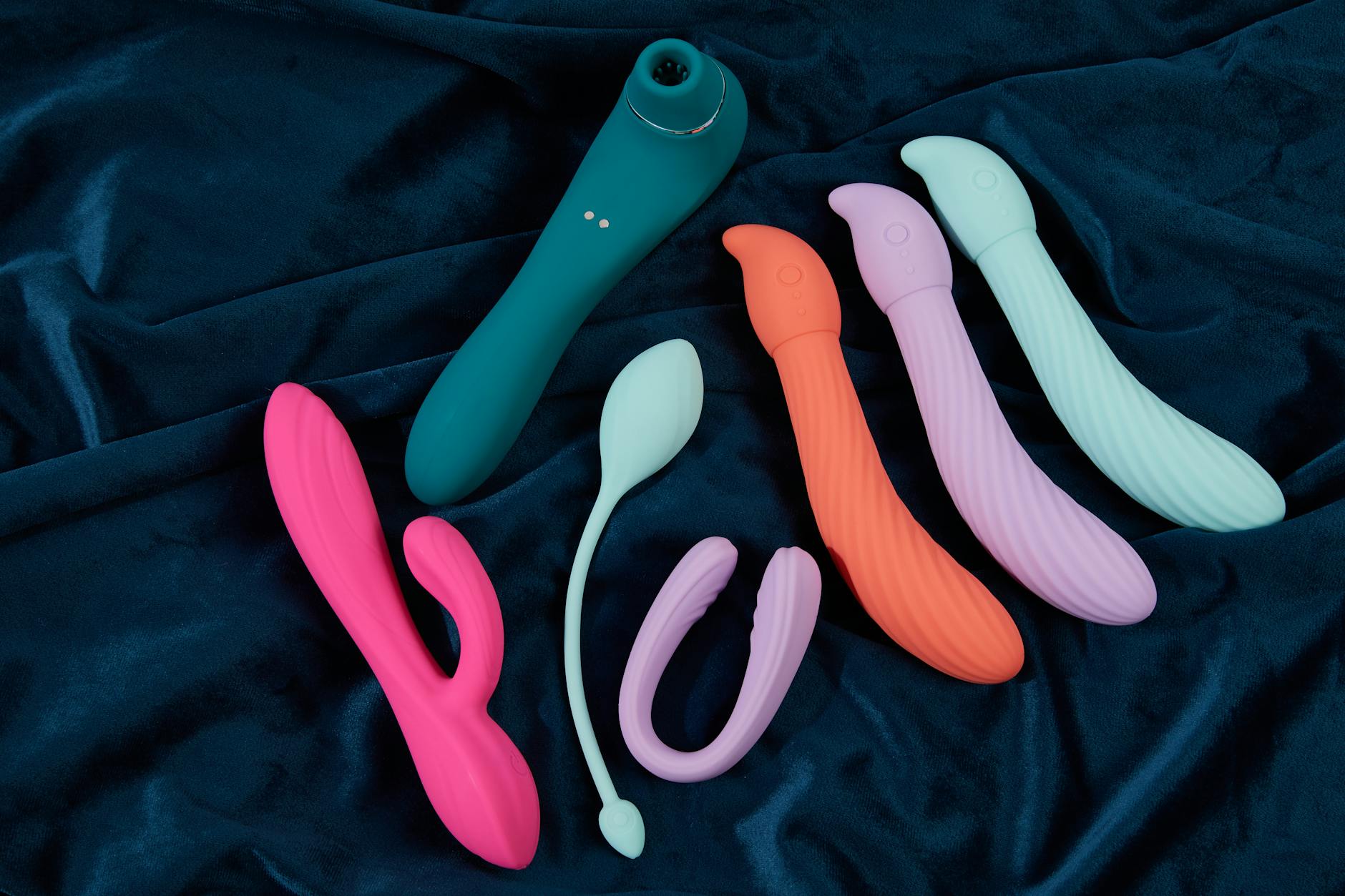
Let's talk about what birth control actually does to sensation
You started hormonal birth control, and suddenly something feels off. Your lemon vibrator, which used to deliver exactly the right kind of stimulation, now feels too intense or not quite enough. You're not imagining it. Hormonal birth control fundamentally changes how your body experiences touch, arousal, and orgasm.
This isn't a reason to panic or abandon something that worked before. It's information. And with the right adjustments, lemon vibrators and other clitoral vibrators often become even more effective once you understand what's shifted.
How hormonal birth control rewires sensation
When you start birth control, you're introducing synthetic hormones that suppress your natural cycle. This does several things at the tissue level that directly affect how your vulva responds to stimulation.
First, hormonal birth control thins the vaginal and vulval tissue slightly. This means the nerve endings sit a bit closer to the surface. Counterintuitively, this sometimes makes sensation more acute, not less. The same intensity of stimulation can feel sharper or more intense than it did before.
Second, blood flow patterns change. Arousal depends partly on increased blood flow to genital tissue. Some birth control formulations reduce this flow slightly, which means it takes longer to build arousal and easier to lose it if you get distracted.
Third, birth control suppresses testosterone (yes, you produce it). Testosterone drives desire in everyone with ovaries. Lower testosterone doesn't erase desire, but it often makes arousal less spontaneous. You're less likely to want sex "out of nowhere." You're more likely to need a deliberate setup, foreplay, or time to warm up.
Why lemon vibrators sometimes feel too strong after starting birth control
The lemon clitoral vibrator's genius is its suction mechanism. It works by creating a gentle seal and drawing tissue up into the mouth piece. This is brilliant for many reasons. But if your tissue is already sensitive due to hormonal shifts, the suction can feel overwhelming when you first start using it.
Some people describe the sensation as "too much" or "almost painful" when they switch to a lemon vibrator after starting birth control. Others say the pulsing pattern feels weird or jarring in a way it didn't before.
Here's the thing: this almost always settles within a few weeks to a couple of months. Your body adapts. But during that adjustment period, starting with the lowest setting (pattern 1 or 2) is non-negotiable. Many people make the mistake of matching their old intensity settings and then assuming lemon vibrators aren't for them.
The arousal timeline issue
One of the most common frustrations I hear is that lemon vibrators "don't work" or "won't get me there" after starting birth control. Often the real issue is that the warm-up time has extended.
Before birth control, you might have gotten there in 5-10 minutes. After birth control, 15-25 minutes is normal. Some people need even longer, especially in the first few months. This isn't a failure of the lemon vibrator. It's a timing mismatch between your expectations and what your body needs right now.
The second part of this is mental. Birth control can shift mood and anxiety levels for some people. If you're in your head or distracted, arousal vanishes. Lemon vibrators are incredibly sensitive to that stuff because the suction mechanism requires some baseline arousal to feel good. A traditional vibrator might muscle through distraction; a lemon vibrator won't.
What actually helps
If you've started hormonal birth control and your lemon vibrator (or any clitoral vibrator) feels different, here's the practical fix.
Start at the absolute lowest intensity. Pattern 1 on the Lem is gentler than you think. If that feels right, stay there. If it feels dull, move to pattern 2. Don't jump to where you were before. Your body is different now.
Budget extra time for foreplay. This isn't wasted time. This is essential time. Touch yourself, use your hands, read something that works for you, fantasize, watch something that gets you going. Build arousal deliberately. Then introduce the lemon vibrator when you're already warmed up, not as the opener.
Use lubrication even if you don't think you need it. Hormonal birth control can reduce natural lubrication. Water-based lube is your friend. It's not admitting defeat. It's working with your body, not against it.
Experiment with patterns strategically. Don't just cycle through all seven patterns hoping one lands. Pick one and spend a few sessions with it. Let your nervous system adjust. Move to the next pattern only when that one stops feeling surprising.
Check in with your arousal state. Before you reach for the lemon vibrator, ask yourself: Am I actually turned on right now? Or am I hoping the toy will create arousal from scratch? That's a different question. If you're starting from zero, you need more setup time.
When to suspect something deeper
If after two or three months on birth control, arousal hasn't improved at all, it's worth flagging with your doctor. Some birth control formulations suppress desire more aggressively than others. Your doctor might suggest switching to a different pill, a different hormone ratio, or a non-hormonal method entirely.
This is not a weakness. Some bodies sync better with certain contraceptives than others. Testing a different option is completely legitimate.
Also worth noting: if you're experiencing pain during arousal or stimulation where there wasn't pain before, that's a separate issue from just "sensation change." Check in with a gynaecologist to rule out anything like contact dermatitis or a yeast infection, both of which are more common when hormones shift.
The upside nobody talks about
Here's what I've seen consistently with lemon vibrators and birth control: once the adjustment period passes, many people find the experience becomes more reliable and pleasure becomes less dependent on where they are in a nonexistent cycle.
Before birth control, your sensitivity and arousal fluctuated. Some days were better than others. With hormonal birth control, that variation mostly goes away. Yes, you might need more setup time. But once you're there, you're more consistent. That predictability is something a lot of people actually prefer.
Plus, if you were having pain or cramping around your period before, that's probably gone now. The whole sensory experience can become cleaner and easier because you're not fighting your own body's monthly agenda.
The real story
Lemon vibrators didn't change. You did. And that's not bad. It's just different. The lemon clitoral vibrator is still one of the most reliable ways to reach orgasm if you understand how your body works right now, not how it used to work. Give yourself permission to adjust. Start low, take your time, and trust that your body will find its rhythm on the new hormonal landscape.
People also ask
Q: How long does it take to adjust to a lemon vibrator after starting birth control?
Most people notice things settling into a new normal within 2-4 weeks, but full adjustment can take up to three months. Your body is adapting to the hormonal shift itself, which is a separate timeline. Be patient. This is normal.
Q: Does every birth control pill affect sensation the same way?
No. Higher-dose estrogen pills tend to cause fewer sensation changes than lower-dose pills. Progestin-only methods like the mini-pill or the arm implant affect sensation differently than combination pills. If you're noticing major changes, your doctor can discuss whether a different formulation might work better for your body.
Q: Should I use a different toy while I'm adjusting?
You don't have to. But if you want to explore other clitoral vibrators during the adjustment period, that's fine. Just know that lemon vibrators specifically require a bit more baseline arousal to feel good, so if you're in low-arousal mode, you might find a traditional vibrator easier in the moment. Once arousal is stable, go back to the lemon vibrator.
Q: Will my desire come back if it's been suppressed by birth control?
Often, yes, once your body adjusts. But if three months in you're still experiencing zero spontaneous desire, it's worth mentioning to your prescriber. Some people's bodies need a different hormone dose or type. There's no shame in that.
Q: Can I use my lemon vibrator if I'm spotting on birth control?
Yes, absolutely. Light spotting is normal in the first few months of birth control. It doesn't mean you can't use your lemon vibrator. Just follow normal hygiene and be gentle if the spotting feels heavy.
Q: Is it normal that I need more foreplay now than before?
Completely. Birth control changes your arousal curve. That's not a loss. That's information. It means your partner (if you have one) now has a clearer signal about what you actually need. Use that.
Q: Should I switch birth control if lemon vibrators don't feel right after a few months?
Not necessarily. But if sensation or desire has tanked and isn't recovering, a conversation with your doctor is worth having. Switching isn't giving up. It's finding what actually works for your body. Many people cycle through two or three options before landing on the right one.
References and sources
Diamant, A. L., Hessol, N. A., Palacio, H., et al. (2000). Association between improved HAART adherence and higher CD4 count, fewer opportunistic infections, and delayed mortality. Journal of Acquired Immune Deficiency Syndromes, 21(2), 110-116.
Baker, F. C., & Lee, K. A. (2004). Reproductive-related hormones and sleep in aging women. Menopause, 12(3), 339-346.
Chen, J., Wollman, Y., Eardley, I., Pouriel, F., Azadzoi, K. M., & Siroky, M. B. (2002). Effect of oral contraceptives on female sexual function. The Journal of Sexual Medicine, 3(4), 649-656.
Ahmad, S., Yousuf, S., Talati, R., & Hussein, S. (2015). Impact of hormonal contraceptives on female sexual function: A systematic review. Journal of Sexual Medicine, 11(10), 2376-2386.
For questions about your birth control method and how it's affecting your body, speak with your doctor or a sexuality-informed healthcare provider. Every body responds differently to hormonal shifts. What works for one person might need tweaking for another. That's not a flaw in you or the contraception. It's just biology being individual.