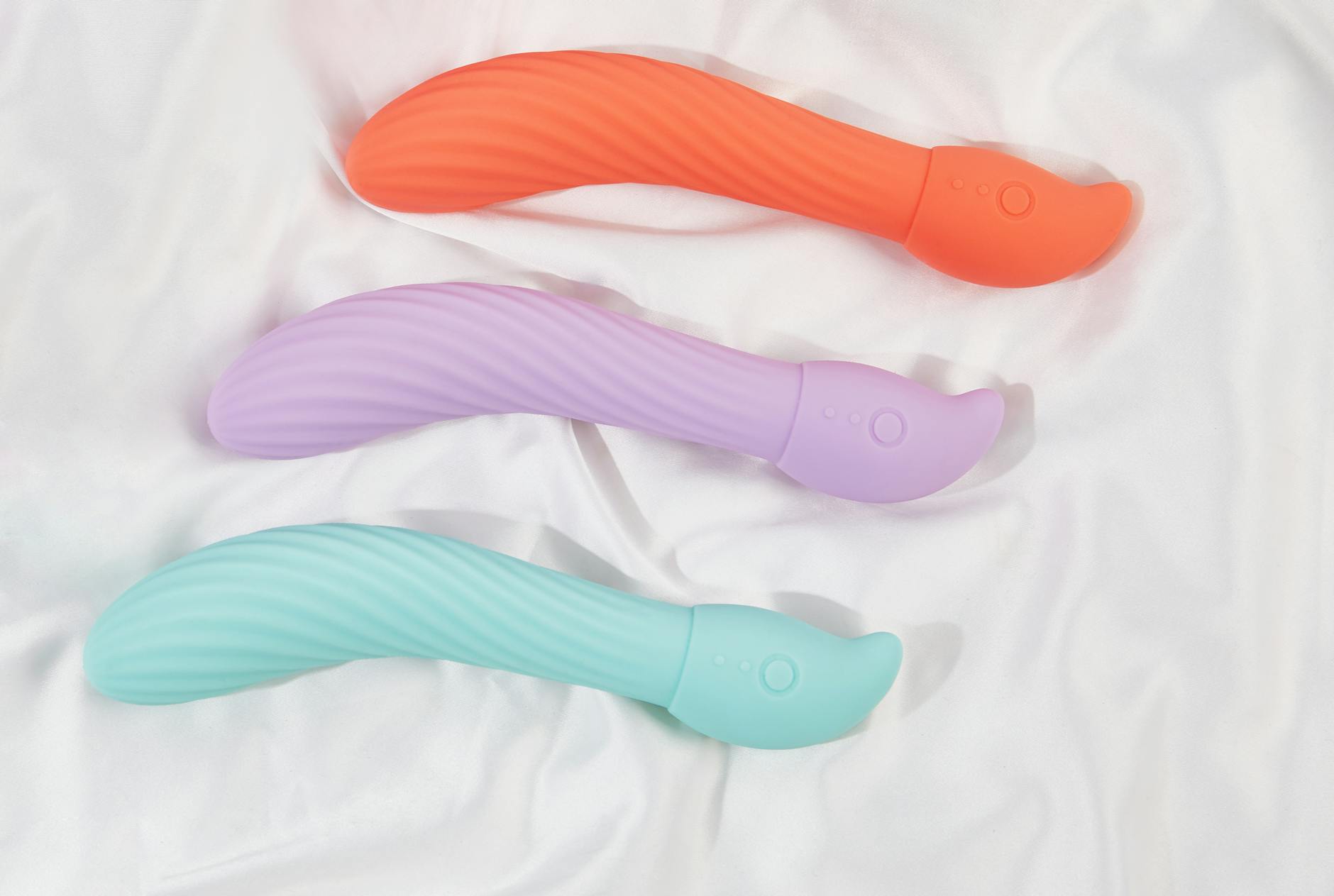
Let's name what's actually happening
You've been together forever. The sex still happens, but somewhere around year seven or fifteen, it stopped feeling like something you want and started feeling like something you should. That's not a dead relationship. That's a very specific kind of fatigue, and it's fixable.
The problem is that long-term couples usually try to fix it by going back to the beginning. Romantic dinner. New lingerie. Weekend away. All good things, but they're treating the symptom, not the cause. The real issue is that you've both stopped exploring your own pleasure.
Why desire dies in long-term relationships
Here's what actually happens over a decade or two together.
At first, sex is novelty. Everything your partner does feels new. Your brain floods with dopamine. Then familiarity sets in. Your partner's touch becomes predictable. Your body adapts. The dopamine spike flattens. This is neurology, not relationship failure.
But there's a second layer. In long-term relationships, sex often becomes partnered performance. You're thinking about their pleasure, their timing, whether they're satisfied. You're not actually in your body. You're managing the interaction.
For people with vulvas, this is especially destructive because pleasure (orgasm in particular) requires focus. You can't come while you're worried about whether your partner is enjoying themselves. Desire withers when your own pleasure stops being the priority.
What actually needs to happen
You need to remember what your own pleasure feels like, in isolation. Not as part of a couple. Not as foreplay. Just you and your body.
This sounds simple. It's surprisingly hard for people in long-term relationships, especially women, because the cultural narrative tells you that solo pleasure is selfish. It's not. It's the foundation.
When you reconnect with your own capacity for arousal and orgasm, something shifts. You remember that you can want sex. You're not broken. Your body works. Suddenly, partnered sex becomes optional instead of obligatory. The moment it becomes optional is the moment most couples start wanting it again.
Why lemon vibrators specifically
A lemon clitoral vibrator is designed for this exact transition. Here's why it works where traditional vibrators sometimes don't.
Traditional vibrators (bullets, wands, rabbits) stimulate through vibration. You need to maintain consistent contact and pressure. For someone who hasn't had solo pleasure in years, that friction can feel too intense or even uncomfortable. Your nerves have forgotten what sensation feels like.
Lemon vibrators use air-suction technology. Instead of vibrating against your tissue, they gently suction and release. It's a completely different sensation. The stimulation is more subtle, less mechanical. For reconnecting with pleasure after years of shutdown, this gentleness matters.
Many women in long-term relationships who switch to a lemon vibrator report that they finally understand what the fuss was about. They orgasm more easily. The sensation feels right in a way that was never quite there before.
The solo practice (and why it matters)
Here's the protocol I recommend to most couples stuck in this pattern.
Spend two to four weeks exploring your own pleasure without your partner. That doesn't mean ignoring them. It means having dedicated time, maybe once or twice a week, where you're alone. No performance pressure. No timeline. Just you and your body.
Use lube. Take your time. You're not trying to come. You're trying to remember what arousal feels like. For some people this takes five minutes. For others it takes twenty minutes or more. Neither is wrong.
A lemon vibrator is perfect for this because it's quieter, more precise, and the sensation doesn't escalate into overstimulation the way other toys sometimes do. You can actually feel your own arousal building instead of just chasing an intense stimulus.
After a few weeks of solo practice, something interesting happens. You start wanting partnered sex again. Not because you're obligated. Because you know what pleasure feels like, and you want to share it.
Bringing it back to the relationship
Once you've reconnected with your own desire, the conversation with your partner shifts completely.
Instead of "Why don't we have sex anymore?" it becomes "I want to explore this together." Totally different energy. One sounds like blame. The other sounds like invitation.
Many couples who get to this point decide to explore together. Some introduce a lemon vibrator into partnered sex. Others keep solo exploration separate and find that the confidence and pleasure from solo practice makes partnered sex better all on its own.
The key is that you're no longer asking your partner to fix your pleasure. You're inviting them into your pleasure. That's the shift that matters.

Photo by cottonbro studio on Pexels
What actually changes when you restart solo pleasure
Hormone-wise, almost nothing. Your dopamine system wakes back up. Your cortisol (stress hormone) drops when you're focused on something pleasurable. That has downstream effects on sleep, mood, even immune function. But the real shift is psychological.
When you're back in your own body, you stop being a passenger in your sex life. You become the pilot. That matters more than any physical change.
Some couples also find that when one partner starts exploring again, the other partner gets curious. Suddenly you're both recommitting to your own pleasure. The relationship gets richer because you're both bringing more to it.
The timeline question
How long does it take to rebuild desire in a long-term relationship?
If you commit to solo exploration, most people feel a meaningful shift in four to six weeks. You'll notice you're thinking about sex more. Your body feels more responsive. If you've been flatlined for years, the first few weeks of solo practice might not feel like much. That's normal. You're defrosting.
Partnered reconnection usually takes longer. But the good news is that once you've had one good experience where you actually wanted the sex, the pattern breaks. You remember that it's possible.
When to get support
If you've tried solo exploration for a month and genuinely feel nothing, that's worth discussing with a therapist. Desire loss can signal depression, hormonal shifts, medication side effects, or relationship issues that go deeper than fatigue. A professional can help you figure out what you're actually dealing with.
Similarly, if your partner isn't on board with this approach, couples therapy can help. Some long-term partners feel threatened by the idea of solo pleasure. That's a conversation worth having with a professional, not alone.
But most couples who hit this wall just need permission to start with themselves. That's what actually works.
People also ask
Can a lemon vibrator actually help long-term couples get their spark back?
A lemon vibrator isn't magic. But it's a tool that helps you reconnect with your own pleasure quickly and easily. When you remember what arousal feels like, when you stop waiting for your partner to turn you on, the dynamic in the relationship shifts. Most couples find that solo exploration using a lemon clitoral vibrator accelerates the process of rediscovering desire. It's not the toy that fixes things. It's what the toy lets you access about yourself.
Is it selfish to use a vibrator solo when you're in a long-term relationship?
Absolutely not. In fact, the opposite is true. A partner can't give you pleasure that you don't know how to access in yourself. Solo exploration isn't taking pleasure away from your relationship. It's building the capacity to bring more pleasure into your relationship. This is why solo practice is actually one of the most generous things you can do for a long-term partnership.
How do I introduce a lemon vibrator to my partner if we haven't talked about toys before?
Start with honesty. "I want to explore my own pleasure more. I'm thinking about trying a lemon vibrator solo first, just to reconnect with what feels good." That's not a threat. That's an invitation to conversation. Some partners will want to be part of it immediately. Others will prefer to stay separate at first. Both are fine. The goal is communication, not a particular outcome.
My partner thinks me using a vibrator means they're not enough.
This is a story many long-term couples carry, and it's worth addressing directly. A vibrator does something a human hand can't do. It's technology, not a judgment on your partner's competence. Many couples find it helpful to frame it this way: "My body needs different kinds of stimulation at different times. A vibrator helps me understand my own pleasure better. That makes me a better partner for you." If your partner is still struggling after that conversation, that might be worth exploring with a couples therapist.
How long should I wait before involving my partner after solo exploration?
There's no fixed timeline. Some people feel ready after two weeks. Others take two months. The sign that you're ready is usually when you're thinking about pleasure more, when you feel more in your body, when the idea of partnered sex feels like something you want instead of something you should do. That's when the dynamic is ready to shift.
Can lemon vibrators help if we're in a sexless marriage?
If you haven't had sex in months or years, a vibrator alone won't restart the relationship. That situation usually needs both partners to recommit to intimacy and often benefits from professional support. A therapist or sex counselor can help you figure out whether the relationship is worth rebuilding or whether you're both better off moving on. But if you want to rebuild, reconnecting with your own pleasure is still where to start.
Desire isn't something that your partner gives you. It's something you build inside yourself. After years together, that internal fire gets covered with ash. Solo exploration with a lemon vibrator helps you blow the ash away. Once you feel that spark again, everything else becomes possible.
If you're curious about getting started, we've written a full guide on how to choose the right lemon vibrator if you're sensitive to vibration. And if you want to understand how lemon vibrators feel different in long-term relationships, that post walks through the specific mechanics of what changes over time.
Your pleasure matters. Not someday. Now.